Northeast Fierce Gladiator
Introduction
In the dynamic and rapidly expanding landscape of Indian gaming, Northeast Fierce Gladiator has emerged as a trailblazer—a title that doesn’t just entertain but also celebrates the rich, often underrepresented cultural heritage of Northeast India. Developed by the visionary team at Daman Games, this action-packed role-playing game (RPG) is more than a mere combat experience; it’s a heartfelt tribute to the diverse tribes, traditions, folklore, and landscapes of the region, woven seamlessly into every aspect of its design, storytelling, and gameplay.
Launched strategically on 15th August 2023—India’s 76th Independence Day—Northeast Fierce Gladiator was born from a simple yet powerful vision: to create a gaming world where desi gamers could see their own culture reflected in a grand, immersive way, rather than relying on Western or Japanese tropes that dominate the global gaming market. For too long, Northeast India’s vibrant cultural tapestry—with its 220+ ethnic groups, unique martial arts, and ancient myths—had been overlooked in mainstream gaming. Daman Games set out to change that, and the result is a game that resonates deeply with Indian players, especially those from the Northeast, who finally see their traditions celebrated on a major gaming platform.
Set in the fictionalized region of “Aryavarta Pradesh”—a lush, expansive world inspired by the seven sister states (Assam, Meghalaya, Manipur, Nagaland, Tripura, Mizoram, Arunachal Pradesh) and Sikkim—Northeast Fierce Gladiator blends real-world cultural elements with fantasy lore to create a universe that feels both familiar and extraordinary. From the mist-shrouded Khasi Hills to the dense rainforests of Assam, from the snow-capped peaks of Arunachal Pradesh to the fertile valleys of Manipur, every environment in the game is a loving recreation of Northeast India’s breathtaking geography, ensuring that players not only battle enemies but also embark on a virtual journey through one of India’s most scenic regions.
What truly sets Northeast Fierce Gladiator apart is its unwavering commitment to authenticity. The development team spent over a year traveling across Northeast India, living with tribal communities, consulting historians, martial arts experts, and local artisans to ensure that every detail—from the characters’ attire and weapons to the in-game music and dialogue—stays true to the region’s cultural essence. This dedication has not only earned the game critical acclaim but also fostered a profound sense of pride among players, who often remark that playing the game feels like reconnecting with their roots.
As a free-to-play title available on multiple platforms, Northeast Fierce Gladiator has democratized access to high-quality desi gaming, allowing players from all walks of life—whether they own a high-end PC or a budget Android device—to experience the thrill of tribal combat and cultural exploration. With over 5 million downloads within its first month of launch and a 4.7-star rating on the Google Play Store, the game has proven that there is a massive appetite for culturally rooted Indian games, paving the way for future developers to explore the country’s rich heritage.
Cultural Significance
Northeast Fierce Gladiator is more than a game—it’s a cultural bridge. For many Indians living outside the Northeast, the game serves as an educational tool, introducing them to the region’s diverse tribes, traditions, and festivals. For Northeast Indians, it’s a source of pride, showcasing their culture to a national audience in a positive, empowering light. The game has even been praised by cultural organizations for its role in preserving and promoting endangered tribal practices, such as traditional martial arts and crafts.
Development History: From Concept to Cultural Phenomenon
The journey of Northeast Fierce Gladiator began in 2019, when Rajesh Mehta—CEO of Daman Games and a native of Guwahati, Assam—identified a glaring gap in the Indian gaming market. While global titles like PUBG Mobile and Free Fire dominated the scene, there were very few games that celebrated Indian culture, let alone the Northeast region. Mehta, who grew up listening to stories of tribal warriors and mythical creatures from his grandparents, was determined to create a game that would make Indians, especially Northeast Indians, feel seen and proud.
The Research Phase: Immersing in Northeast Culture
The development team at Daman Games understood that authenticity was key to the game’s success, so they embarked on an extensive research journey that spanned over a year. The team traveled to seven Northeast Indian states, living with tribal communities like the Khasis, Nagas, Mizos, Bodos, and Manipuris to learn about their way of life, combat styles, traditional weapons, attire, and folklore.
One of the biggest challenges was translating these cultural elements into engaging gameplay without diluting their authenticity. For example, the team spent weeks with Naga warriors, observing how they use the “dao” (a traditional machete-like weapon) and “spear” in combat. They then worked with martial arts experts to replicate these fighting styles in the game, ensuring that every swing, thrust, and block felt true to Naga combat traditions. Similarly, the team learned about Khasi archery techniques from local hunters, incorporating their precision and stealth into the game’s ranged combat mechanics.
The game’s visual style is another testament to the team’s commitment to authenticity. The hand-painted textures, vibrant color palettes, and traditional motifs—such as Khasi “jatra” patterns, Naga beadwork, and Assamese “mekhela chador” designs—were all created by Northeast Indian artists. The team also captured hundreds of reference photos of the region’s landscapes, from the living root bridges of Meghalaya to the tea gardens of Assam, to ensure that the game’s open world felt like a genuine representation of Northeast India.
Audio design was equally important. The game’s soundtrack features traditional Northeast Indian instruments like the “khynriam” (a Khasi string instrument), “naga drum,” and “borgeet” (Assamese devotional music), composed by local musicians. The voice acting for tribal characters was done by native speakers, ensuring that the dialogue—including tribal languages and dialects—was accurate and respectful.
Beta Testing: Listening to the Indian Audience
In 2022, Daman Games launched a closed beta test of the game, inviting over 10,000 players from across India—including rural areas and small towns—to try it out. The response was overwhelming, with players praising the game’s cultural authenticity but also providing valuable feedback that would shape the final version.
One of the most common feedback points was performance on low-end devices. Many beta testers from rural parts of India reported that the game lagged or crashed on their budget Android phones, which typically have 2GB RAM or less. The development team took this seriously, as they wanted the game to be accessible to all Indians, not just those with high-end devices. They spent three months optimizing the game’s graphics and code, reducing its file size and improving its performance on low-spec hardware.
Another key feedback was the need for more regional languages. The beta initially supported only English and Hindi, but many players from the Northeast requested support for their native languages, such as Assamese, Bengali, Manipuri, and Khasi. The team added these languages in the final version, making the game more inclusive and relatable to regional players.
Players also requested additional game modes tailored to Indian gaming preferences. For example, many Indian gamers enjoy playing with friends and family, so the team added a “Desi Co-op” mode that allows up to four players to team up and complete missions together. They also added a “Festival Event” mode, which ties in with Northeast Indian festivals like Hornbill and Bihu, based on feedback that players wanted more cultural content.
Launch and Post-Launch Success
The game’s launch on 15th August 2023 was a strategic move, aligning with India’s Independence Day celebrations and tapping into national pride. Daman Games partnered with top Indian gaming influencers like CarryMinati, Mortal, and Techno Gamerz to promote the game, and organized launch events in Guwahati, Shillong, Delhi, and Mumbai. These events featured live performances by Northeast Indian musicians, cosplay contests, and gaming tournaments, drawing thousands of players.
The launch was a resounding success. Within 24 hours, Northeast Fierce Gladiator crossed 1 million downloads on the Google Play Store, making it one of the fastest-growing Indian games of all time. By the end of its first month, the game had over 5 million downloads and a 4.7-star rating from over 100,000 reviews. What’s particularly impressive is that a large portion of these downloads came from rural areas, thanks to the game’s optimization for low-end devices.
The post-launch period has been marked by regular updates, with the team releasing new content every 2-3 months. These updates have included new characters (based on tribes like the Garo and Tripuri), game modes, and events tied to Northeast Indian festivals. For example, the Hornbill Festival update (December 2023) added a new Naga-themed arena, exclusive skins, and a co-op quest centered around the festival. The Bihu Festival update (April 2024) added Assamese-themed weapons, a dance mini-game, and a new storyline involving the Ahom dynasty.
The team’s commitment to listening to the community has been a key factor in the game’s ongoing success. They regularly engage with players on social media and Discord, soliciting feedback and implementing popular suggestions. For example, the “Tribe Alignment” system—where players can align with a specific tribe to unlock unique perks—was added based on player requests for more personalized gameplay.
Conceptualization of Northeast Fierce Gladiator by Daman Games CEO Rajesh Mehta; initial research begins.
Extensive field research across Northeast India; collaboration with tribal communities, historians, and artists; game development begins.
Closed beta testing with 10,000+ players; optimization for low-end devices; addition of regional languages based on feedback.
Official launch of Northeast Fierce Gladiator on 15th August; crosses 1 million downloads in 24 hours.
First post-launch update: adds new character (Garo Warrior) and co-op mode improvements.
Hornbill Festival update: new Naga-themed content, arena, and exclusive rewards.
Bihu Festival update: Assamese-themed weapons, dance mini-game, and Ahom dynasty storyline.
Launch of "The Arunachal Quest" expansion; cross-platform play; international release.
Gameplay Mechanics: Blend of Tradition and Innovation
Northeast Fierce Gladiator offers a gameplay experience that strikes the perfect balance between accessibility and depth, making it suitable for both casual players and hardcore gamers. At its core, the game is a third-person action RPG with a focus on melee and ranged combat, but it adds unique twists inspired by Northeast Indian culture that set it apart from other titles in the genre.
The game’s designers understood that Indian gamers have diverse preferences—some enjoy fast-paced action, while others prefer strategic gameplay and exploration. As a result, Northeast Fierce Gladiator incorporates elements of multiple genres, ensuring that there’s something for everyone. Whether you’re a casual player looking to explore the beautiful open world or a hardcore gamer seeking competitive PvP battles, the game has you covered.
Combat System: Tribal Warfare Reimagined
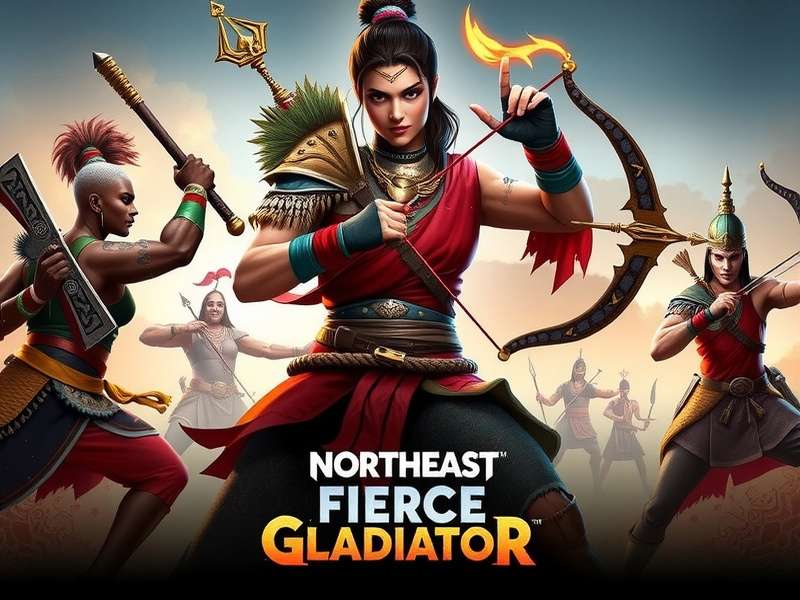
The game’s combat system is the heart of the experience, rooted in the traditional fighting styles of Northeast Indian tribes. Unlike many Western games that rely on fast-paced button-mashing, Northeast Fierce Gladiator emphasizes strategy, timing, and skill, encouraging players to learn their character’s moveset and adapt to different opponents.
Players can choose from three main combat styles, each inspired by a different aspect of Northeast tribal warfare:
Melee Combat: Brute Strength and Honor
Melee characters—such as the Naga Warrior and Bodo Fighter—specialize in close-quarters combat, using traditional weapons like the dao, spear, club, and shield. Their moves are powerful and deliberate, reflecting the brute strength and honor of tribal warriors. For example, the Naga Warrior’s “Dao Slash” is a devastating horizontal attack that can take down multiple enemies at once, while the Bodo Fighter’s “Shield Bash” can stun opponents and create openings for follow-up attacks.
Ranged Combat: Precision and Stealth
Ranged characters—like the Khasi Archer and Mizo Sniper—wield bows, crossbows, and throwing knives, relying on precision and stealth to take down enemies from a distance. Their moves are quick and agile, reflecting the hunting traditions of Northeast tribes. The Khasi Archer’s “Wind-Guided Arrow” can curve around obstacles to hit hidden enemies, while the Mizo Sniper’s “Silent Strike” allows for one-hit kills on unsuspecting foes.
Hybrid Combat: Versatility and Adaptability
Hybrid characters—such as the Assamese Warrior and Manipuri Fighter—combine melee and ranged attacks, offering versatility in combat. They are ideal for players who like to switch up their playstyle depending on the situation. The Assamese Warrior can dual-wield a sword and throwing axes, while the Manipuri Fighter uses a spear for melee attacks and throwing knives for ranged strikes.
Each character also has a set of “Cultural Abilities”—special moves inspired by tribal rituals and myths. These abilities not only deal damage but also reflect the cultural significance of the tribe. For example, the Naga Warrior’s “War Cry” ability boosts the player’s attack power and intimidates enemies (a nod to Naga warrior traditions of intimidating foes before battle), while the Khasi Archer’s “Forest Blessing” ability heals the player and allies (reflecting the Khasi tribe’s deep connection to nature).
The game also features a “Combo System” that rewards players for chaining together attacks. By landing consecutive hits, players build up a “Fury Meter,” which, when full, unlocks a devastating “Legendary Attack” unique to each character. These attacks are visually spectacular and deal massive damage, making them crucial for taking down powerful bosses and winning PvP battles.
Movement & Exploration: Navigating Northeast Landscapes
Exploration is a key part of Northeast Fierce Gladiator, with the game’s open-world map spanning over 50 square kilometers of fictionalized Northeast Indian terrain. The map is divided into seven regions, each inspired by a different Northeast state, and features a wide variety of environments—from snow-capped mountains and dense jungles to fertile valleys and tribal villages.
Players can traverse the map in several ways, each reflecting the region’s geography and culture:
- On Foot: The most basic form of movement, allowing players to explore every nook and cranny of the world. Players can climb, swim, jump, and crouch, making it easy to navigate even the most rugged terrain.
- Traditional Mounts: Players can ride animals commonly found in Northeast India, such as elephants, yaks, and horses. Mounts not only speed up travel but also offer unique abilities—for example, elephants can break through barriers, while yaks can traverse snow-covered terrain.
- Boats: Players can use boats to navigate the Brahmaputra River and other water bodies in the game, allowing them to access hidden areas and complete water-based quests.
The map is filled with “Hidden Paths” that lead to rare loot, side quests, and cultural landmarks—like ancient stone monoliths (inspired by Khasi traditions), tribal villages, and sacred forests. These hidden areas encourage players to explore off the beaten path, rewarding curiosity with valuable items and cultural insights.
One of the most unique aspects of exploration is the “Cultural Discovery” system. As players explore the world, they encounter interactive elements that teach them about Northeast Indian culture. For example:
- Visiting a Khasi village might trigger a cutscene where players learn about the “Shad Suk Mynsiem” (Dance of the Happy People), a traditional Khasi dance performed during harvest festivals.
- Exploring a Naga settlement could unlock a side quest involving beadwork, where players help a Naga artisan create traditional jewelry (a key part of Naga culture).
- Traveling through Assam’s tea gardens might introduce players to the process of making Assam tea, a major part of the region’s economy and culture.
These cultural discoveries not only add depth to the game but also make exploration feel meaningful. Players aren’t just collecting loot—they’re learning about a rich and diverse culture, making the game both entertaining and educational.
Crafting & Resource Management: Using Local Materials
Crafting is an integral part of Northeast Fierce Gladiator, allowing players to create weapons, armor, and consumables using resources found in the game world. The crafting system is designed to reflect Northeast Indian traditions, with many recipes requiring local materials that are commonly used in the region’s crafts and daily life.
Players can gather resources in several ways:
- Foraging: Collect bamboo, cane, jute, medicinal herbs, and fruits from the jungle. These resources are used to make lightweight armor, bows, arrows, and healing potions.
- Hunting: Hunt animals like deer, boar, and birds for hides, meat, and bones. Hides are used to make leather armor, while bones are used to craft weapons like spears and clubs.
- Mining: Mine iron, copper, and gold from mountains and caves. These metals are used to forge powerful weapons and armor, as well as decorative items like jewelry.
- Trading: Trade with tribal villagers for rare resources, such as rare herbs, beads, and textiles. Villagers often offer better prices if the player has completed quests for them.
Resources can be crafted into items at “Crafting Stations” located in tribal villages and player camps. Each Crafting Station specializes in a different type of item—for example, the “Weapon Smithy” is used to make weapons, while the “Armor Workshop” is used to make armor. The game also features “Master Craftsmen” in each village who can teach players advanced recipes in exchange for rare resources.
Many of the game’s crafting recipes are inspired by traditional Northeast Indian crafts. For example:
- Bamboo bows and arrows: Inspired by Khasi and Naga hunting traditions.
- Cane shields: Used by Bodo and Mizo warriors for defense.
- Beaded jewelry: A key part of Naga and Khasi attire, which provides stat bonuses like increased defense.
- Medicinal potions: Made from herbs used in traditional Northeast Indian remedies, which heal the player and provide temporary buffs.
Resource management is an important part of the game, as some materials are scarce and required for powerful items. Players must balance gathering resources with completing quests and fighting enemies, adding a layer of strategy to the gameplay. For example, a player might need to decide whether to spend time foraging for bamboo to make a new bow or focus on completing a quest that rewards a rare weapon.
Leveling & Progression: Growing Your Legend
Northeast Fierce Gladiator features a robust leveling system that allows players to customize their characters and improve their abilities as they progress through the game. Each time a player levels up (by gaining experience points from quests, combat, and exploration), they earn “Skill Points” that can be spent on three skill trees: Combat, Survival, and Culture.
Combat Skill Tree
Focuses on improving the player’s combat abilities, including:
- Increased attack power and defense.
- New combos and special moves.
- Reduced cooldown for Cultural Abilities.
- Improved weapon proficiency (e.g., better accuracy with bows, more damage with swords).
Survival Skill Tree
Enhances exploration and resource-gathering, including:
- Increased foraging and hunting speed.
- Better resource yields (e.g., gathering more herbs from a single plant).
- Improved mount stamina and speed.
- Ability to swim faster and hold breath longer.
Culture Skill Tree
Unique to Northeast Fierce Gladiator, this skill tree allows players to unlock cultural bonuses and abilities, including:
- “Tribal Unity”: Increases the damage and defense of allies in co-op mode.
- “Folklore Knowledge”: Reveals hidden paths and secrets on the map.
- “Crafting Mastery”: Reduces the number of resources needed to craft items.
- “Cultural Respect”: Improves relations with tribal villagers, leading to better trade deals and exclusive quests.
Players can also customize their characters’ appearance with a wide range of traditional Northeast Indian attire. These outfits aren’t just cosmetic—many provide stat bonuses, making them both stylish and functional. Some popular customization options include:
- Naga shawls with beadwork and feather decorations: Increase attack power.
- Khasi jainsem (long dress) and headscarf: Improve stealth and speed.
- Assamese mekhela chador (two-piece garment) with gold jewelry: Boost defense and healing.
- Mizo lungi and vest: Enhance agility and dodge chance.
The game also features a “Tribe Alignment” system, where players can choose to align their character with a specific tribe. This alignment affects the character’s abilities and interactions with NPCs. For example, aligning with the Naga tribe unlocks exclusive combat perks, while aligning with the Khasi tribe grants bonuses to exploration and resource-gathering. Players can switch their alignment at any time, but switching requires completing a quest for the new tribe, encouraging players to engage with different tribal cultures.
Character Roster: Tribal Warriors with Depth
One of the biggest strengths of Northeast Fierce Gladiator is its diverse and well-developed character roster. Each character hails from a different Northeast Indian tribe, with a unique backstory, personality, and playstyle. The development team worked hard to ensure that each character feels authentic and represents the culture of their tribe, avoiding stereotypes and clichés.
Unlike many games where characters are just skins with different abilities, Northeast Fierce Gladiator’s characters have rich backstories that tie into the game’s lore and the real-world culture of their tribes. These backstories are revealed through in-game cutscenes, dialogue, and side quests, making players feel emotionally invested in their characters.
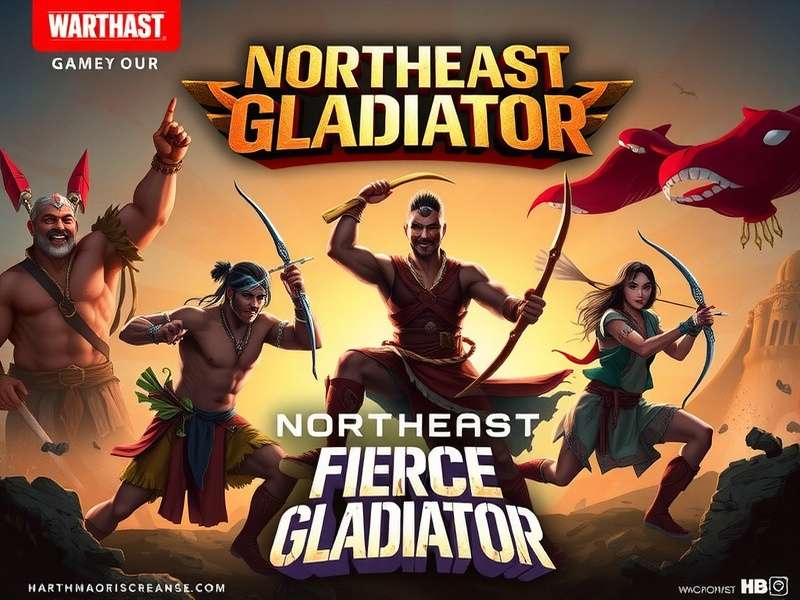
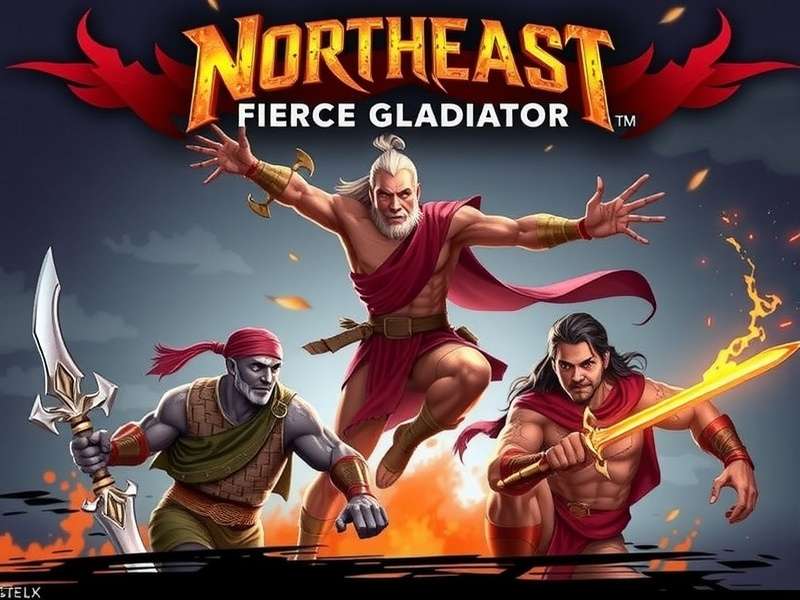
The game currently features 15 playable characters, with more planned in future updates. Below are some of the most popular characters, each representing a different tribe and playstyle:
Kohima – The Naga Warrior
Combat Style: Melee (Dao & Spear)
Born into a family of Naga warriors, Kohima witnessed the destruction of his village by the Shadows of the Himalayas—a dark force that threatens to engulf Aryavarta Pradesh. Driven by revenge and a desire to protect his people, he sets out to find the Gem of Unity, which he believes can defeat the Shadows.
Kohima is fierce, loyal, and deeply connected to his tribal roots. He follows the Naga warrior code of honor, which emphasizes bravery, loyalty, and respect for elders. His Cultural Ability, “War Cry,” boosts his attack power and terrifies enemies, while his Legendary Attack, “Naga Fury,” allows him to unleash a flurry of dao strikes that decimate foes.
Inspired by the real-life Naga warriors who are known for their bravery and skill in combat, Kohima’s design features traditional Naga attire—including a shawl with beadwork, feather decorations, and tattoos that symbolize his warrior status.
Sohra – The Khasi Archer
Combat Style: Ranged (Bow & Arrow)
A skilled archer from the Khasi hills, Sohra is the guardian of her village’s sacred forest—a source of life and spiritual power for the Khasi tribe. When the Shadows begin to destroy the forest, she sets out to find the Gem of Unity, believing it can restore balance to nature.
Sohra is wise, patient, and has a deep respect for nature. She follows the Khasi belief in “U Lum Sohpetbneng” (the sacred golden peak), which teaches harmony with the environment. Her Cultural Ability, “Wind Guide,” increases the accuracy and range of her arrows, while her Legendary Attack, “Forest Storm,” summons a hail of arrows that rain down on enemies.
Inspired by the Khasi tribe’s expertise in archery and their connection to nature, Sohra’s design features a traditional Khasi jainsem (long dress), a headscarf, and jewelry made from natural materials like wood and stone. Her bow is crafted from bamboo, a material commonly used by Khasi hunters.
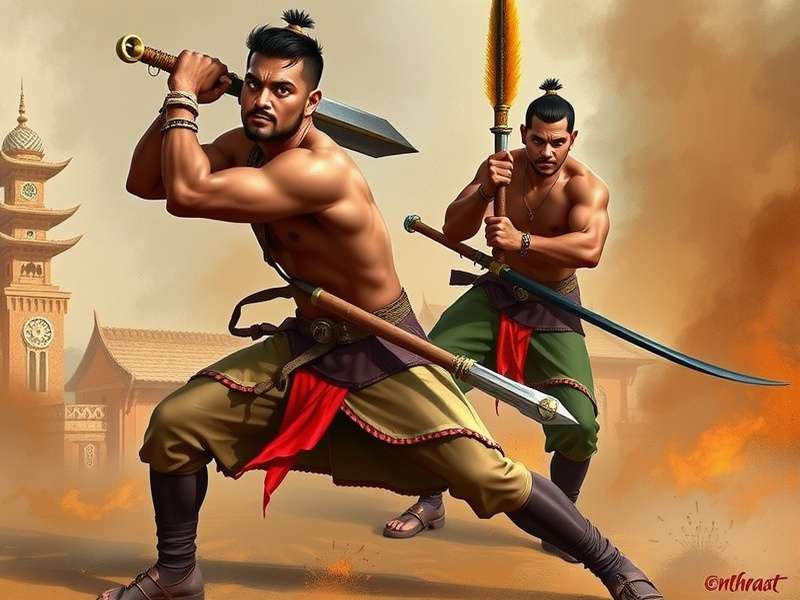
Bhaskar – The Assamese Warrior
Combat Style: Hybrid (Sword & Shield + Throwing Axes)
A former soldier from the Ahom dynasty, Bhaskar is a master of both melee and ranged combat. He served in the Ahom army for many years, defending the Brahmaputra Valley from invaders. When the Shadows begin to pollute the Brahmaputra River— the lifeblood of Assam—he sets out to find the Gem of Unity to cleanse the river and protect his people.
Bhaskar is honorable, brave, and dedicated to protecting the Brahmaputra Valley. He follows the Ahom code of conduct, which emphasizes loyalty, courage, and respect for the land. His Cultural Ability, “Ahom Fury,” allows him to dual-wield weapons for a limited time, while his Legendary Attack, “Brahmaputra Strike,” unleashes a powerful shockwave that damages all enemies in front of him.
Inspired by the Ahom dynasty’s military traditions and Assamese culture, Bhaskar’s design features a traditional Assamese mekhela chador (two-piece garment) with gold jewelry, a shield emblazoned with the Ahom symbol, and a sword crafted in the style of Ahom warriors.
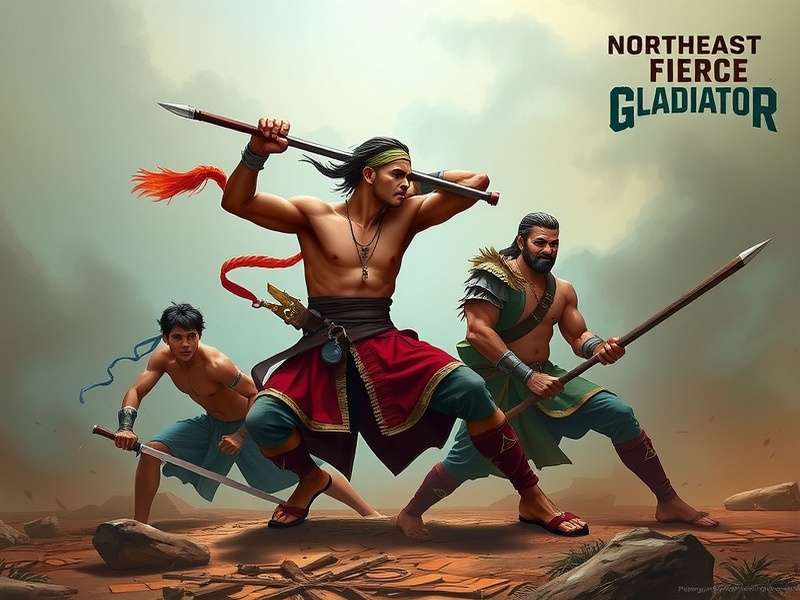
Lalrin – The Mizo Fighter
Combat Style: Melee (Staff & Martial Arts)
A skilled martial artist from Mizoram, Lalrin learned to fight from her grandfather, a former Mizo warrior. She uses her speed and agility to outmaneuver enemies, relying on traditional Mizo martial arts techniques that emphasize quick strikes and evasive movements. When the Shadows attack her village, she sets out to find the Gem of Unity to protect her people’s way of life.
Lalrin is quick-witted, adaptable, and fiercely independent. She believes in the Mizo value of “tlawmngaihna” (self-sacrifice for the greater good), which guides her actions throughout the game. Her Cultural Ability, “Mizo Dash,” allows her to teleport short distances and dodge attacks, while her Legendary Attack, “Mizo Storm,” unleashes a flurry of staff strikes that stun and damage enemies.
Inspired by Mizo martial arts and culture, Lalrin’s design features a colorful Mizo lungi and vest, with intricate patterns that reflect Mizo textiles. Her staff is crafted from cane, a material commonly used in Mizo crafts.
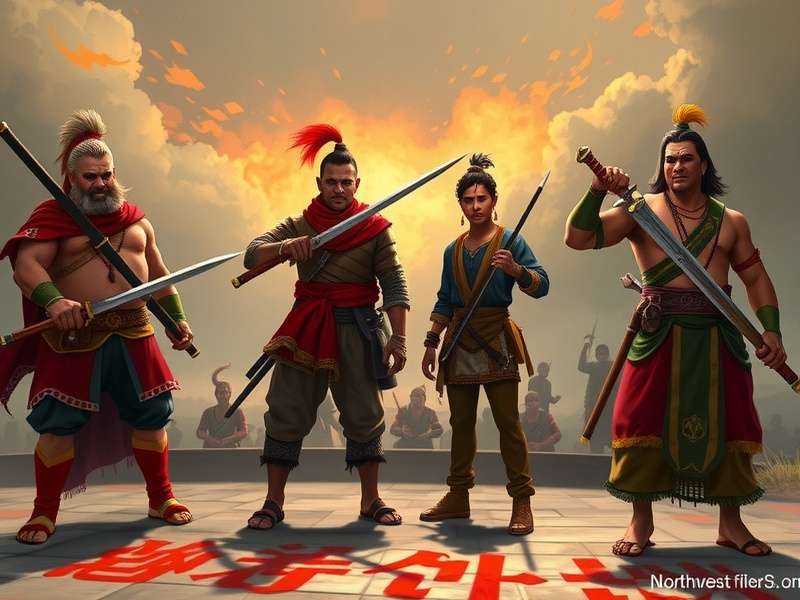
Imphal – The Manipuri Warrior
Combat Style: Hybrid (Spear & Throwing Knives)
Inspired by the ancient Manipuri martial art of Thang-Ta, Imphal is a master of both offense and defense. He trained in Thang-Ta from a young age, learning to wield the spear and knife with precision and discipline. When the Shadows threaten to destroy the ancient Manipuri temples and cultural sites, he sets out to find the Gem of Unity to preserve his people’s heritage.
Imphal is calm, disciplined, and driven by a desire to restore peace to his homeland. He follows the principles of Thang-Ta, which emphasize self-control, respect, and harmony. His Cultural Ability, “Thang-Ta Strike,” delivers a powerful combo attack that stuns enemies, while his Legendary Attack, “Manipuri Fury,” allows him to throw a volley of knives that seek out enemies.
Inspired by Manipuri culture and Thang-Ta martial arts, Imphal’s design features traditional Manipuri attire—including a white dhoti and a shawl with red and gold patterns. His spear and knives are crafted in the style of Manipuri weapons, with intricate engravings that symbolize his training.
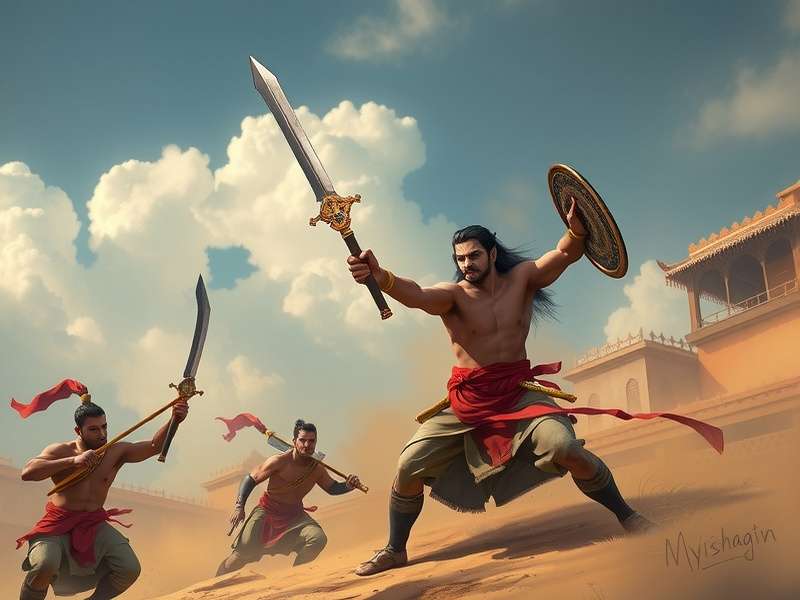
Bwisagu – The Bodo Fighter
Combat Style: Melee (Club & Shield)
A gentle giant from the Bodo community, Bwisagu uses his immense strength to protect the weak. He grew up in a small Bodo village, where he learned to fight with a club and shield—traditional Bodo weapons used for self-defense. When the Shadows attack his village and kidnap several children, he sets out to find the Gem of Unity to rescue them and protect his people.
Bwisagu is kind-hearted, loyal, and loves to celebrate life with his people. He enjoys participating in Bodo festivals like Bwisagu (the spring festival), which celebrates the harvest and new life. His Cultural Ability, “Bodo Charge,” allows him to ram into enemies and knock them off their feet, while his Legendary Attack, “Giant’s Wrath,” delivers a powerful club strike that creates a shockwave.
Inspired by Bodo culture and traditions, Bwisagu’s design features a traditional Bodo dokhona (a long dress-like garment) and a shield decorated with Bodo patterns. His club is carved from a single piece of wood, with metal spikes for added damage.